
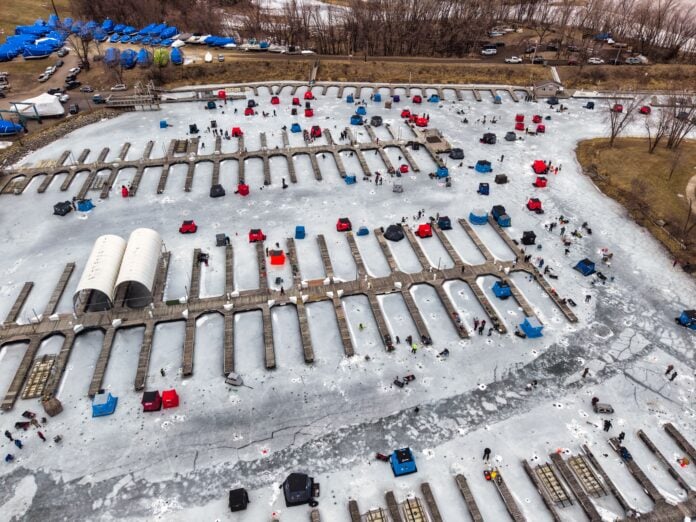


Cold weather is Minnesota’s built-in product-development advantage. Inventors here design and test winter gear, ice-fishing equipment, snow-management tools, cold-weather apparel, and heating products in the exact conditions those products must survive. A founder in a warm climate has to simulate a Minnesota January. A founder in Champlin or Duluth just walks outside. That difference, real testing in real conditions, is why so many durable cold-weather products trace back to this state.
A category the climate hands you
Minnesota winters are long and genuinely severe, and that hardship has always pushed practical invention. Ice fishing alone supports a deep product ecosystem: portable shelters, augers, electronics, sleds, heaters, and rod designs, much of it developed by people who fish these lakes every winter. Winter recreation, snow removal, and cold-weather work gear extend the category further. When your customers face the same conditions you do, product feedback is immediate and honest.
The US Patent and Trademark Office grants a large volume of utility patents each year, more than 300,000 in a recent year according to USPTO data, and a meaningful share of outdoor, recreation, and cold-weather products in that record come from northern-tier inventors who live inside the problem they are solving. Proximity to the problem is a quiet but real edge in getting a product right.
Why real-condition testing changes a product
Cold does things to products that no spreadsheet predicts. Plastics turn brittle. Lubricants thicken. Batteries lose capacity. Adhesives fail. Gloved hands cannot work small controls. A designer who tests in a heated room will miss all of it. A Minnesota inventor discovers these failures in the parking lot and fixes them before a manufacturer ever sees the product. That built-in stress test raises the odds that the final design actually works, which is exactly what a licensing partner wants to see.
From cold-weather idea to real product
Living inside the problem is an advantage in design, but it does not change the path to market. A cold-weather invention still has to be cleared, designed, and presented like any other product.
The first step is confirming the idea is not already patented. Ice fishing and winter gear are crowded categories with decades of prior art, so a professional patent search that reads the USPTO record for close matches is worth doing before any design money is spent. The USPTO’s public search tools and current fee schedule are available through its official site.
The second step is turning the idea into something a company can evaluate. That no longer requires a hand-built physical unit for most products. Photorealistic renderings and a CAD model, with animation when a mechanism needs to be shown moving, let a manufacturer assess the product on its design and engineering. Physical prototypes are reserved for the cases that truly need a functional test, which for cold-weather gear can be legitimate, since a shelter or an auger has to prove out in the field.
Enhance Innovations, a product development firm founded in 2010 and based in Champlin, Minnesota, handles this path for independent inventors. It keeps industrial design, engineering, marketing, and licensing representation under one roof and works virtual-first, producing the renderings and CAD a company needs before recommending any physical build. Being a Minnesota firm, it also understands the cold-weather categories that inventors here keep bringing to it, from ice-fishing accessories to snow tools.
The market beyond the state line
A cold-weather product tested in Minnesota does not stay in Minnesota. The northern United States, Canada, and cold regions worldwide buy winter gear, and the outdoor recreation market is large and steady. Small businesses, which make up 99.9 percent of US firms according to the US Small Business Administration, supply much of the specialized winter-product market, because the categories are too niche for the largest manufacturers to dominate. That leaves room for an independent inventor with a genuinely better cold-weather product.
The advantage is real, but it is only a start
Living where the product must work is a real edge, and Minnesota inventors should use it. But the climate only helps with the design. Clearing the idea, protecting it, and presenting it professionally still decide whether a good cold-weather product reaches a shelf or stays in the garage. The inventors who pair Minnesota’s real-world testing ground with a disciplined path to market are the ones whose winter ideas become products other people can buy.
This article is educational and is not legal or financial advice. Confirm current patent rules and fees directly with the USPTO and do your own research before making decisions.